
Advancing Science
Pioneering New Frontiers
Usona's Medicinal Chemistry lab focuses on synthesizing novel molecules and conducting research to deepen understanding of compounds' interactions with the central nervous system. Through open-access publications and our Investigational Drug Supply Program, the team produces well-characterized compounds that support the clinical development of psilocybin, while sharing novel discoveries and making these insights broadly available to advance the field.
Medicinal Chemistry
Publications
Contributing to the global scientific dialogue
Our exploration of psychedelic compounds is guided by discovery through scientific rigor. Our Medicinal Chemistry team publishes impactful research articles in collaboration with scientists around the globe.
R Brown, NM Hamilton, C Mallon, J Stevenson, MT Faley, RB Kargbo,Journal of Labelled Compounds and Radiopharmaceuticals 68 (9-10), e4155
In Vitro Psilocybin Synthesis by Co‐Immobilized Enzymes
T Schäfer, A Sherwood, T Kirkland, T Krüger, J Worbs, O Kniemeyer, Chemistry–A European Journal 31 (29), e202501037

Alex Kwan, PhD
Professor in the Meinig School of Biomedical Engineering at Cornell University
“Specifically for a study published in Nature Communications in 2025, we collaborated with Alex Sherwood at Usona who provided us with a range of psychedelics and non-hallucinogenic agonists. The compounds allowed us to make head-to-head comparisons, showing that a drug’s effects on gene expression may provide a fingerprint for classifying the drug action. This will be a new tool for drug discovery.”
“Our study published in Nature pinpointed mechanistically the specific cell type and receptor involved in psilocybin’s long-lasting effects on synapses. This wouldn’t have been possible without Usona’s psilocybin, and continues a long line of studies where we have used Usona’s compounds to study the synapse-generating potential of psychedelics including psilocybin and 5-MeO-DMT.”

Investigational Drug Supply Program
Supporting Global Research

The Investigational Drug Supply Program (IDSP) provides investigational GMP psilocybin to qualified researchers studying a wide range of indications and research questions. To date, the program has supported 142 investigational psilocybin shipments to 66 clinical sites in 16 countries, helping academic and clinical partners explore psilocybin’s therapeutic potential in diverse settings and populations, as well as exploring more basic mechanistic and fundamental questions.
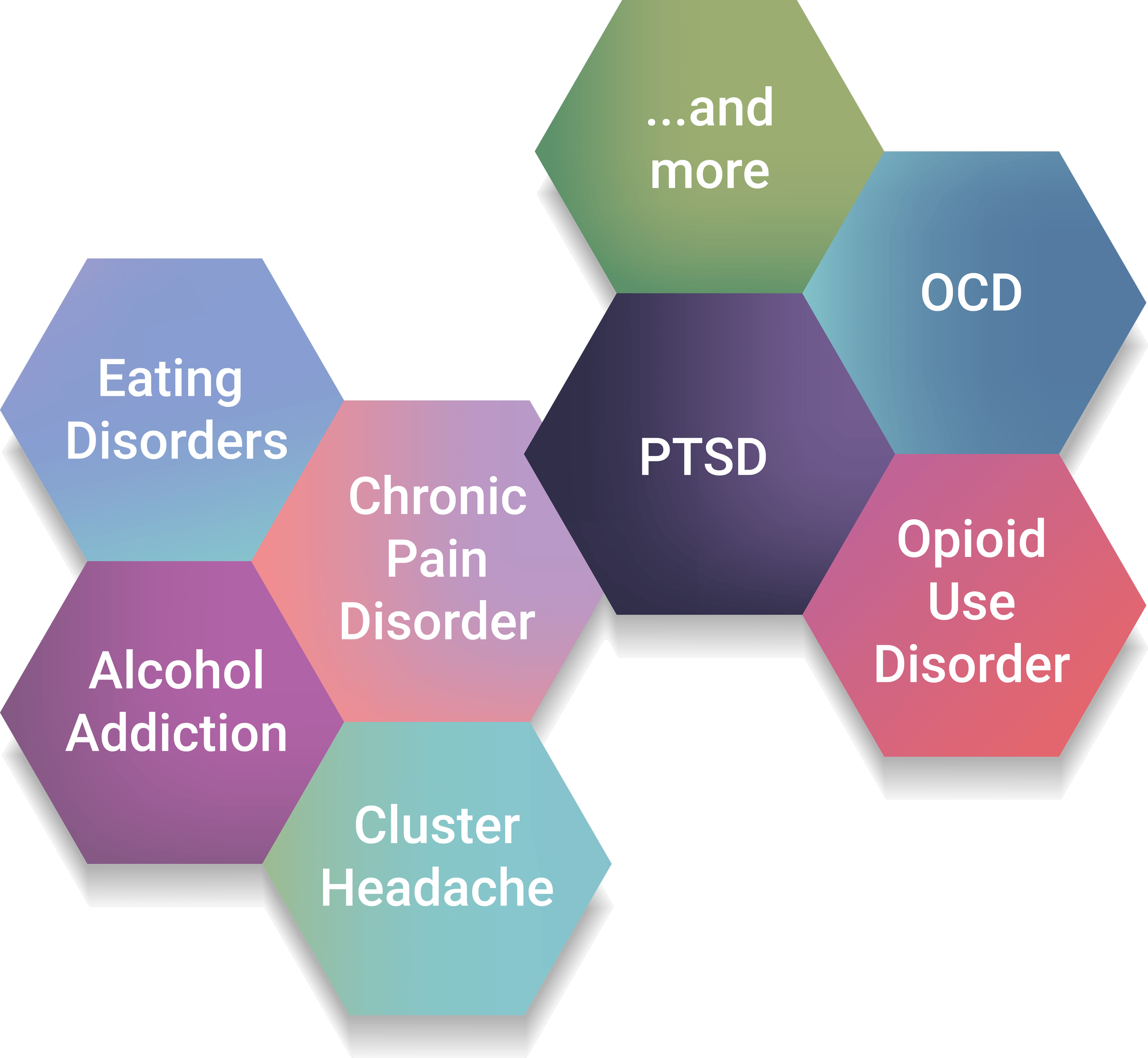
In 2025, IDSP continued to expand its reach, opening 41 new investigator-initiated trial requests and multiple preclinical collaborations, with a steady stream of outbound shipments to leading universities and medical centers.
Looking ahead, IDSP is positioned to scale its distribution system to support additional growth. In doing so, the program offers an enabling infrastructure for the field by multiplying the reach of Usona’s mission by supporting high-quality, scientifically rigorous psychedelic research across many indications of potential therapeutic impact.

Read the interview with Dr. Hiroyuki Uchida of Keio University on launching Japan’s first psilocybin trials and the steps being taken to ensure a safe, culturally appropriate psychedelic future.

Dr. Margaret Ross
Senior Clinical Psychologist at St. Vincent’s Hospital in Melbourne, Australia
“We will never forget the kindness and invaluable support of Usona. Thank you again for helping us make history here at home, and to change the lives and deaths of our courageous participants and their families.”
Researchers worldwide use Usona-provided investigational drugs to conduct groundbreaking studies, such as the September 2025 published trial in General Hospital Psychiatry demonstrating the impact of psilocybin therapy on treating depression, anxiety, and existential distress in individuals with life threatening illnesses, where current treatments show limited efficacy.
Usona's commitment to open science extends through its collaboration with Porta Sophia, which advances evidence-based psychedelic policy reform through multi-state advocacy and education, publications, and prior art documentation.